


Mark Schniepp
September 2026
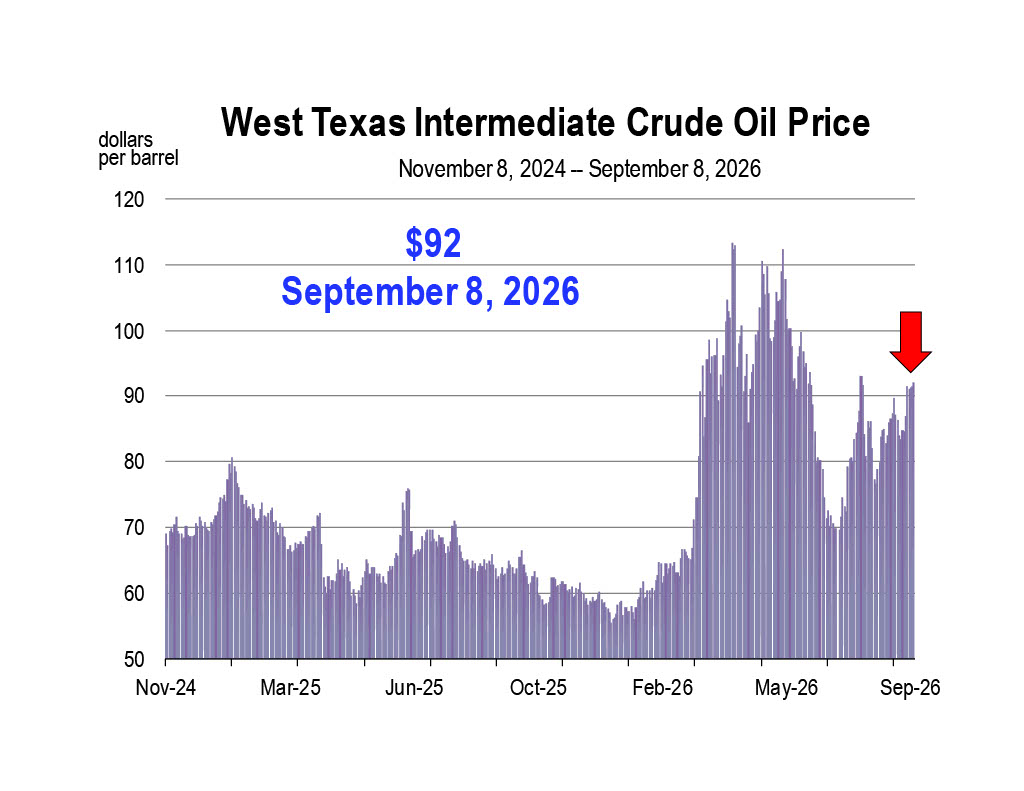
The Iran-Israeli-U.S. war has now entered month 7. The first bombs fell on February 28, 2026. On-again off-again snippets of war raged through the summer with concerns about interrupted flows of oil through the Strait of Hormuz never really resolved.
Consequently, oil prices have remained elevated for much of the year. Higher oil prices have impacted costs for many goods (and services) including transportation, energy, and trucking. Indirectly higher costs here have indirectly pushed food, plastics, rubber, lubricants, and asphalt prices higher.
Elevated inflation rates have pushed both shorter and longer term interest rates higher, stalling downward progress that had been steadily made over the last 2 years.
While inflation has still been remarkably contained over the last several months, longer term interest rates have rebounded 50 to 60 basis points. Forecasts made at the beginning of the year had mortgage rates below 6.0 percent by summer. Inflation forecasts for Q3 were also pegged at 2.2 to 2.6 percent. These indicators are still likely to move lower when the war is ultimately resolved, but we lose up to a year in delayed progress.
Consequently, the economy’s full potential to expand has largely been restrained by higher borrowing costs and higher product prices across the consumer and producer domain.
A year ago, it was believed the regime of tariffs ushered in by the new administration would raise prices on consumer goods and encumber overall economic growth. Higher tariffs threatened against many of our trading partners generally did not manifest. The average effective tariff rate calculated by the Tax Foundation is 6.6 percent for calendar 2026. Tariffs have been largely absorbed and only parts of it passed through. Consequently, a smaller impact on the inflation rate has ensued, and that part is mostly obscured by higher oil prices.
Labor Markets
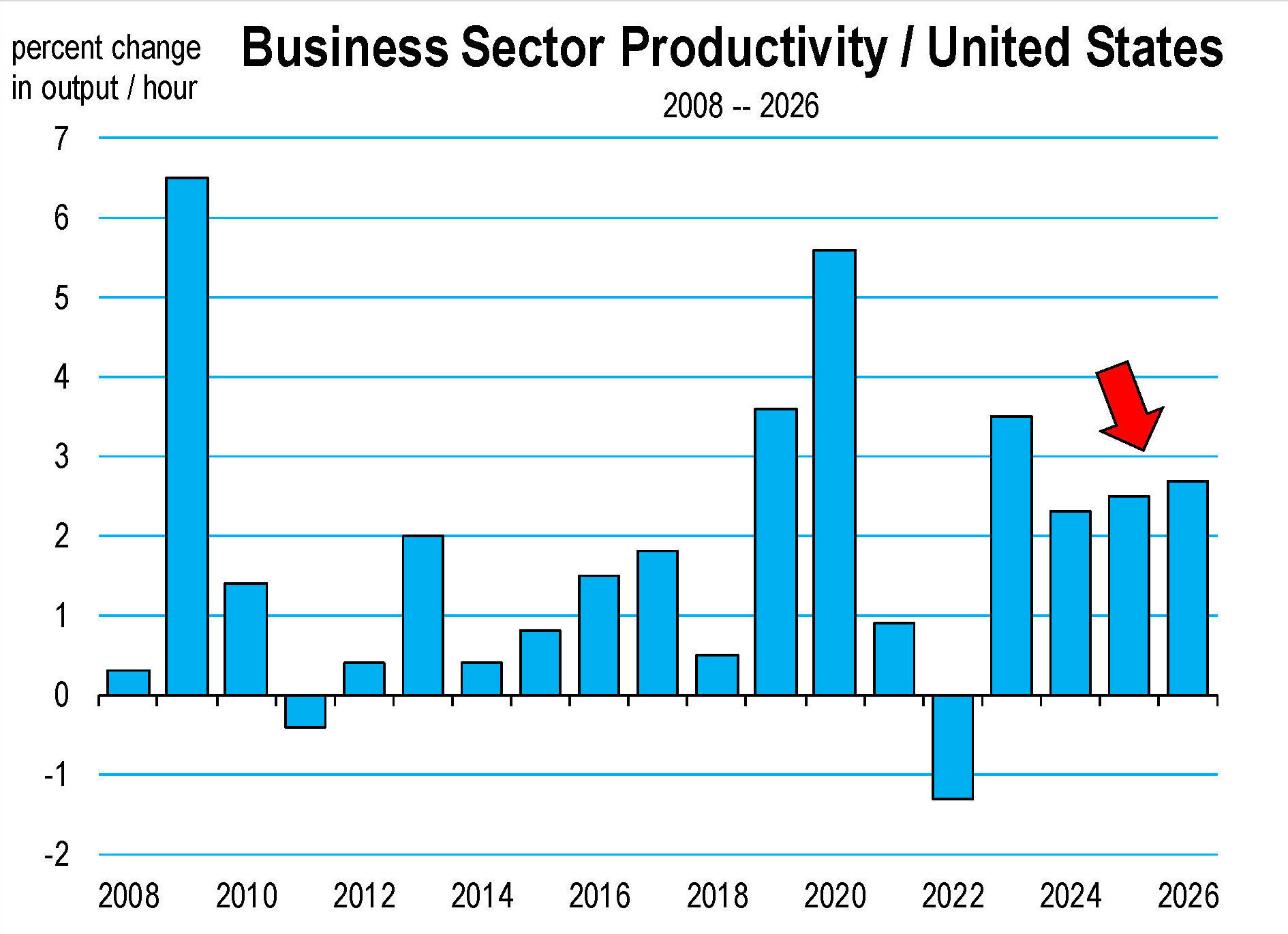
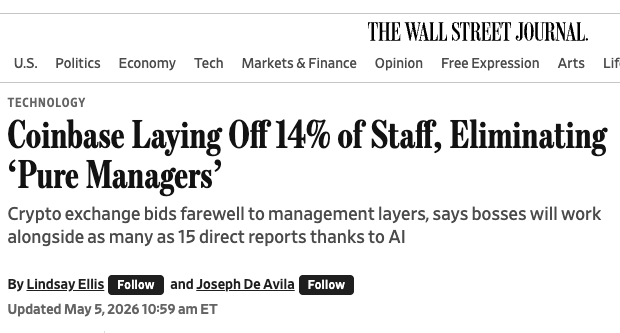
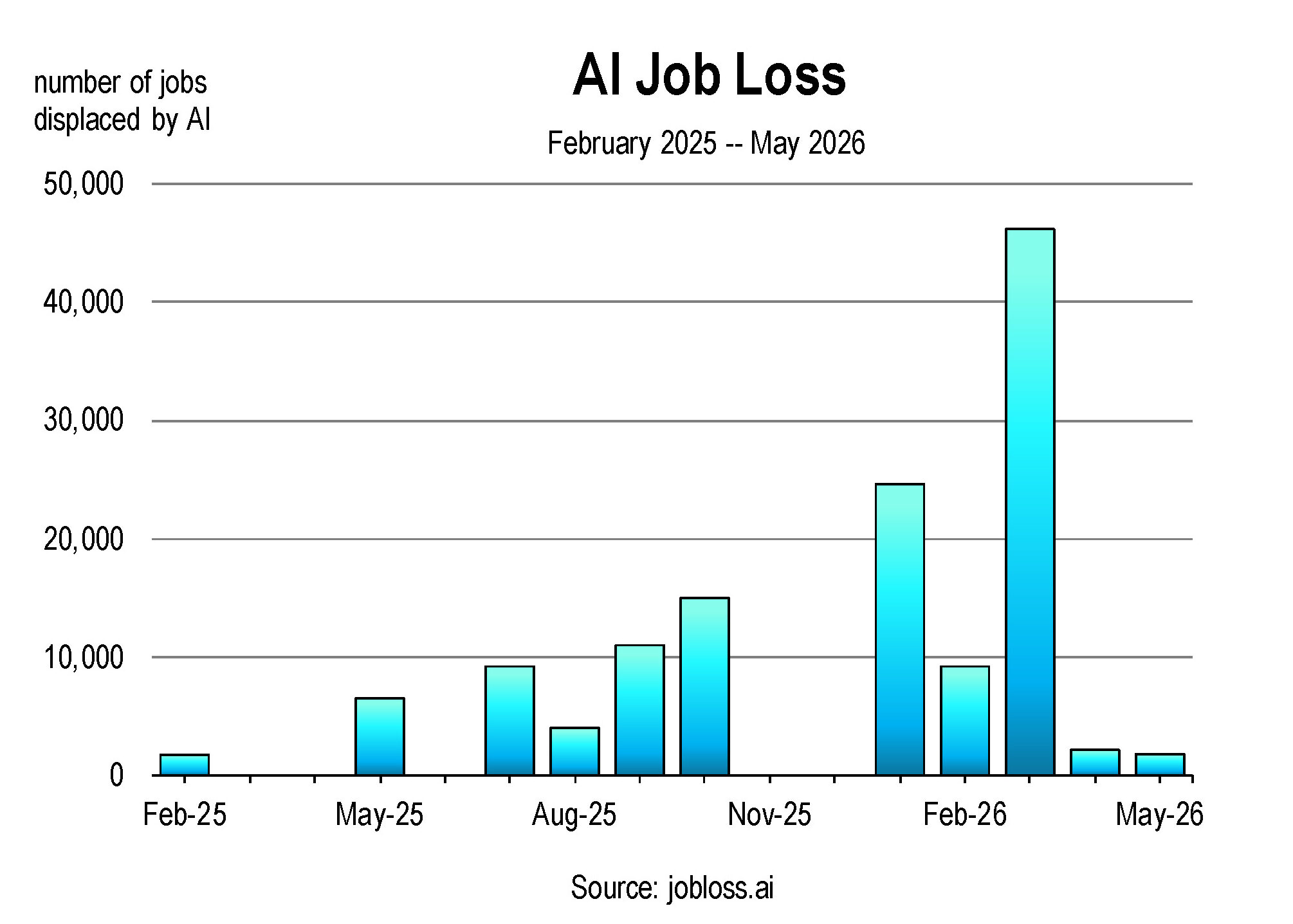
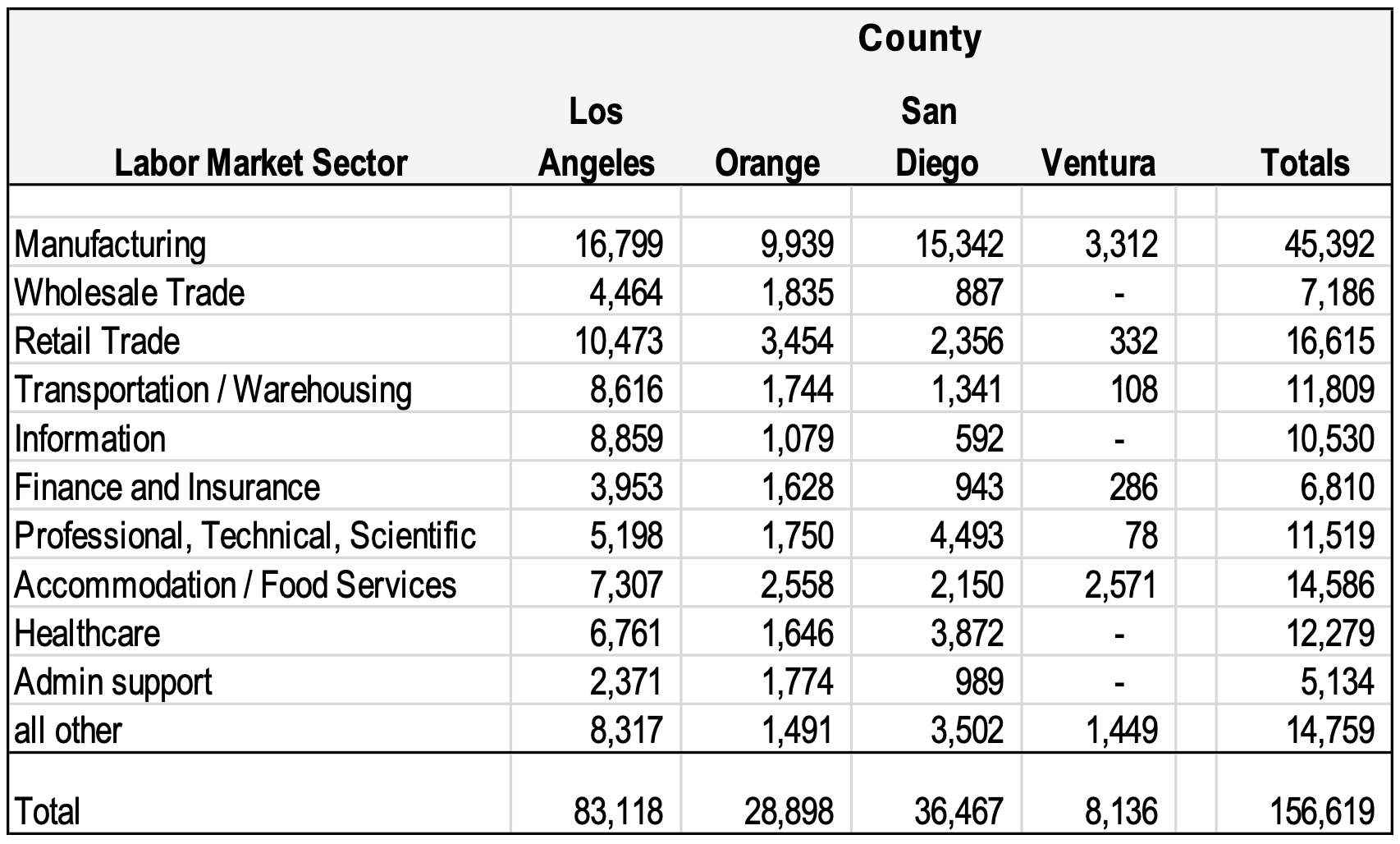
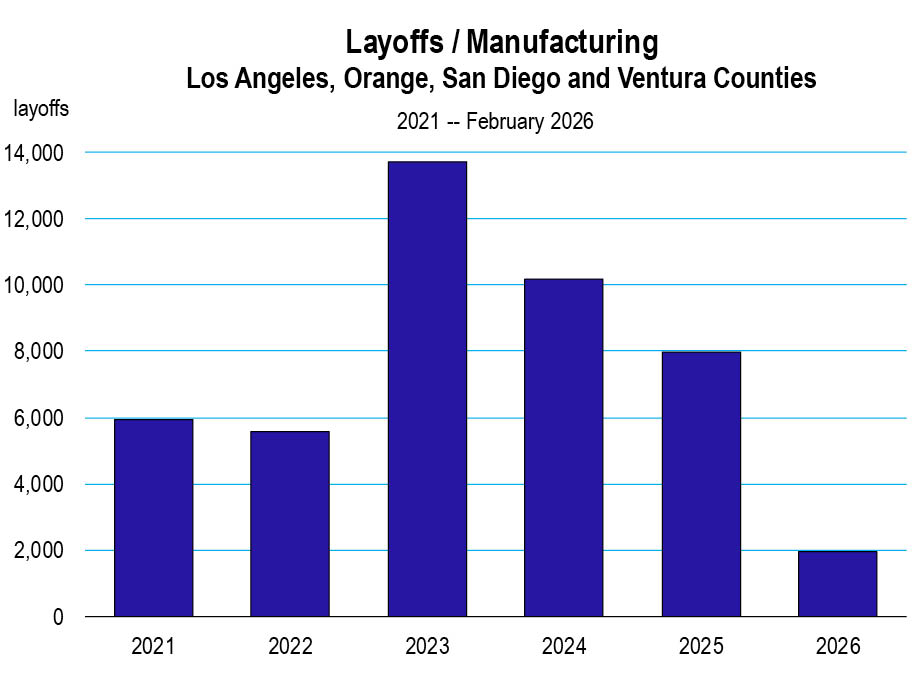
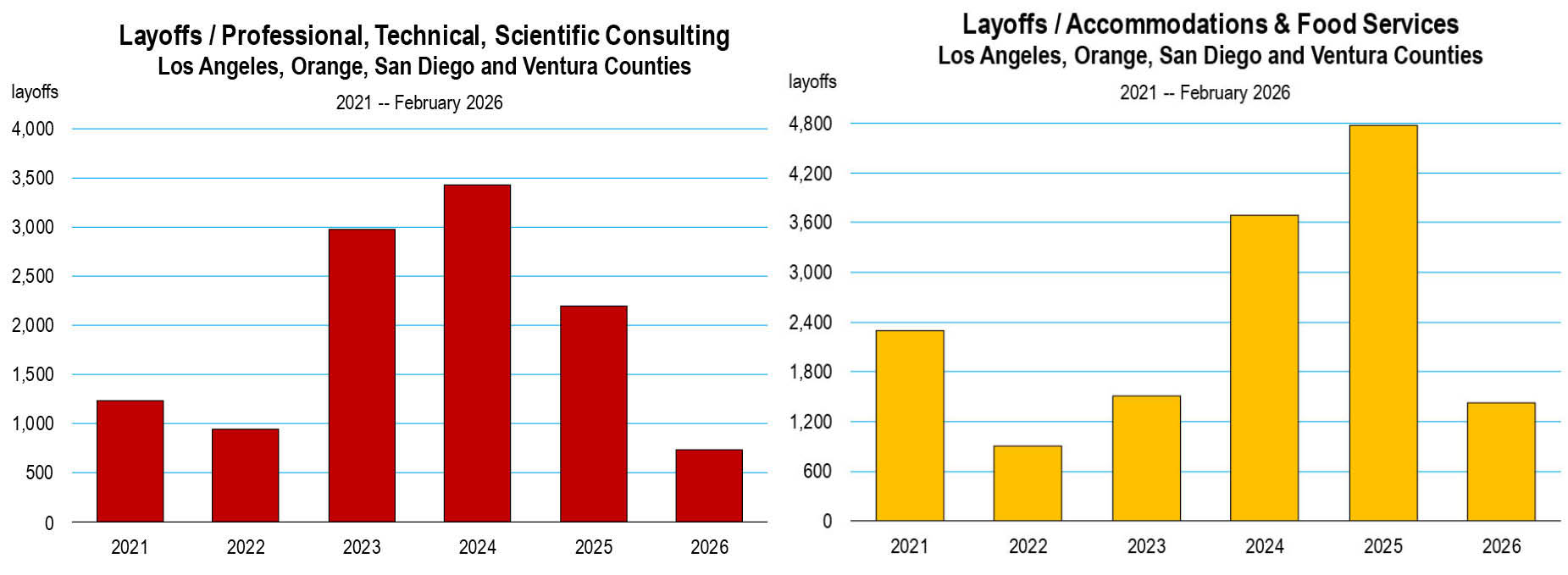
The other glaring issue is how labor markets are currently being disrupted by the growing adoption of AI systems and automations by businesses. The clear and general softening of demand for workers in most sectors of the economy has led to consolidations of workforces in finance, manufacturing, professional services, utilities, retail trade, wholesale trade, and information.
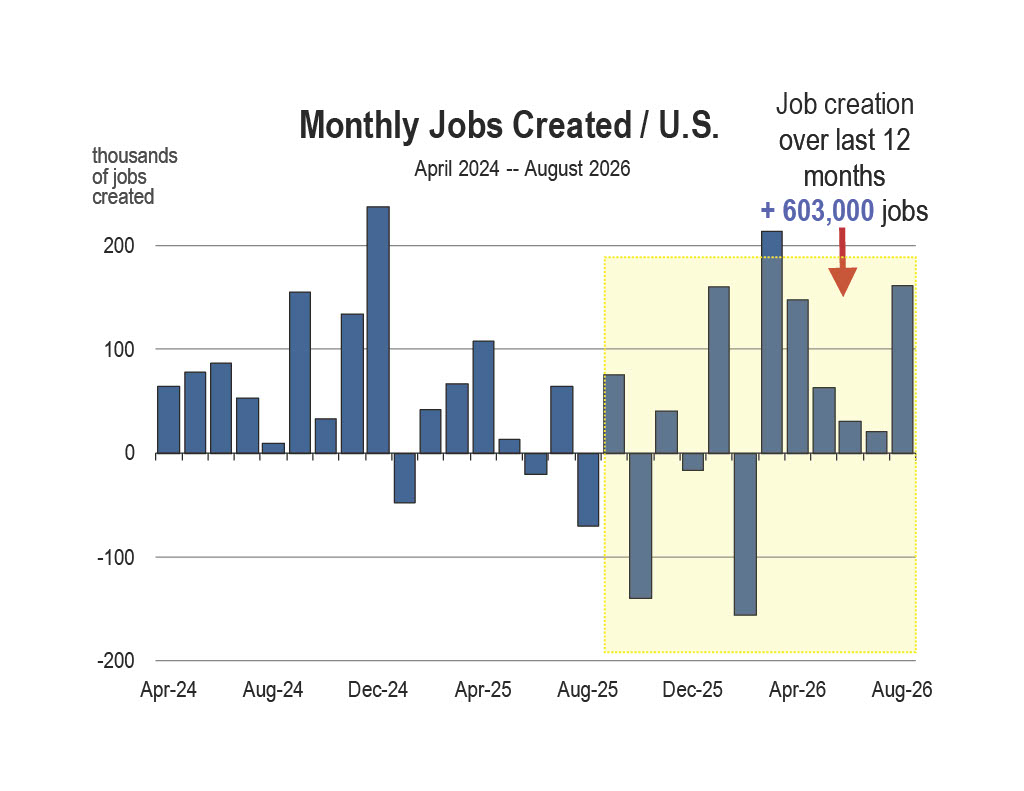
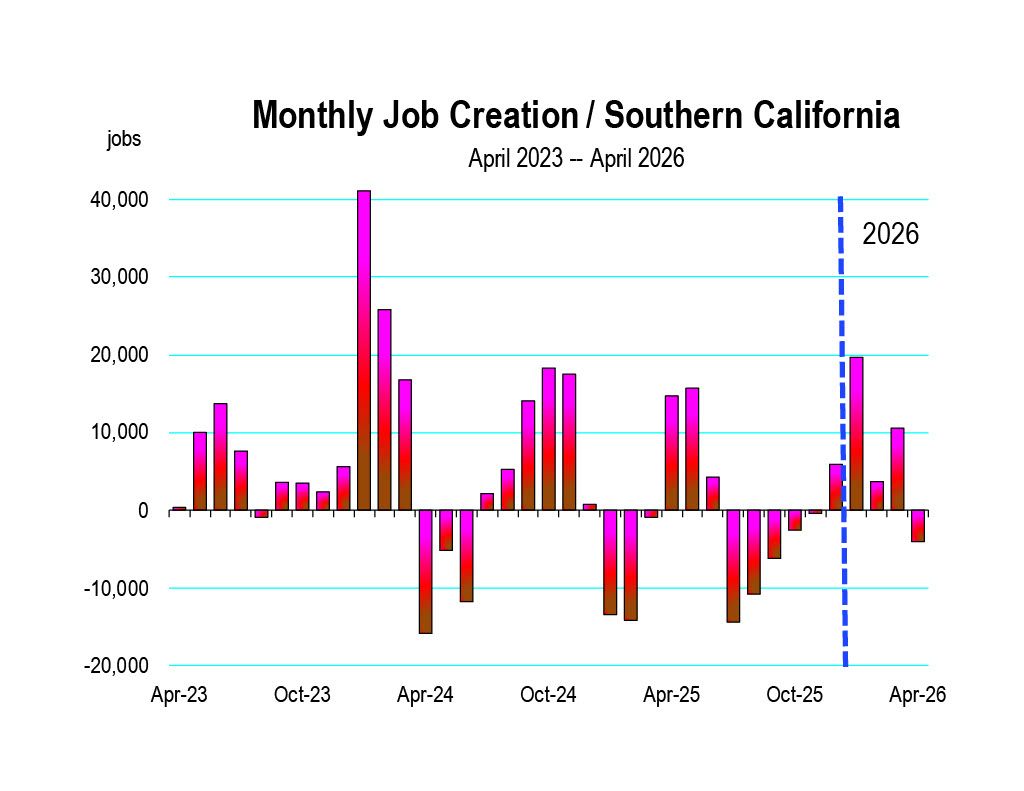
Job creation over the last twelve months has added 603,000 jobs to the U.S. labor market, including 162,000 in the latest reporting for August. In California, job creation over the last 12 months sums to 113,000 new jobs, including a decline of 23,000 jobs in the latest reporting month of July.
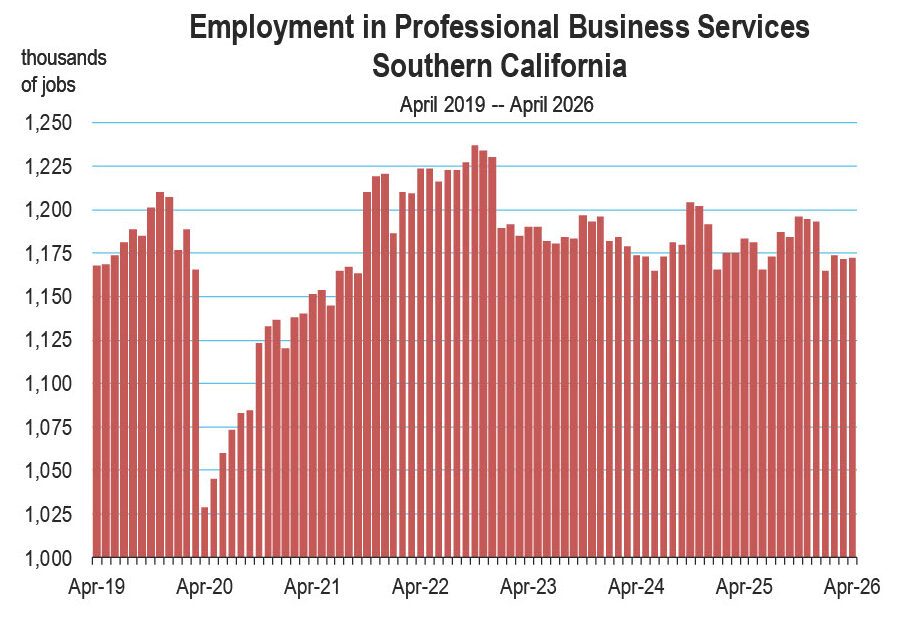
Job openings have settled back to pre-pandemic levels but only the healthcare and leisure/hospitality sectors are expanding their workforces in California. Retail trade and professional services are neutral this year; all other industries report shrinking employment.
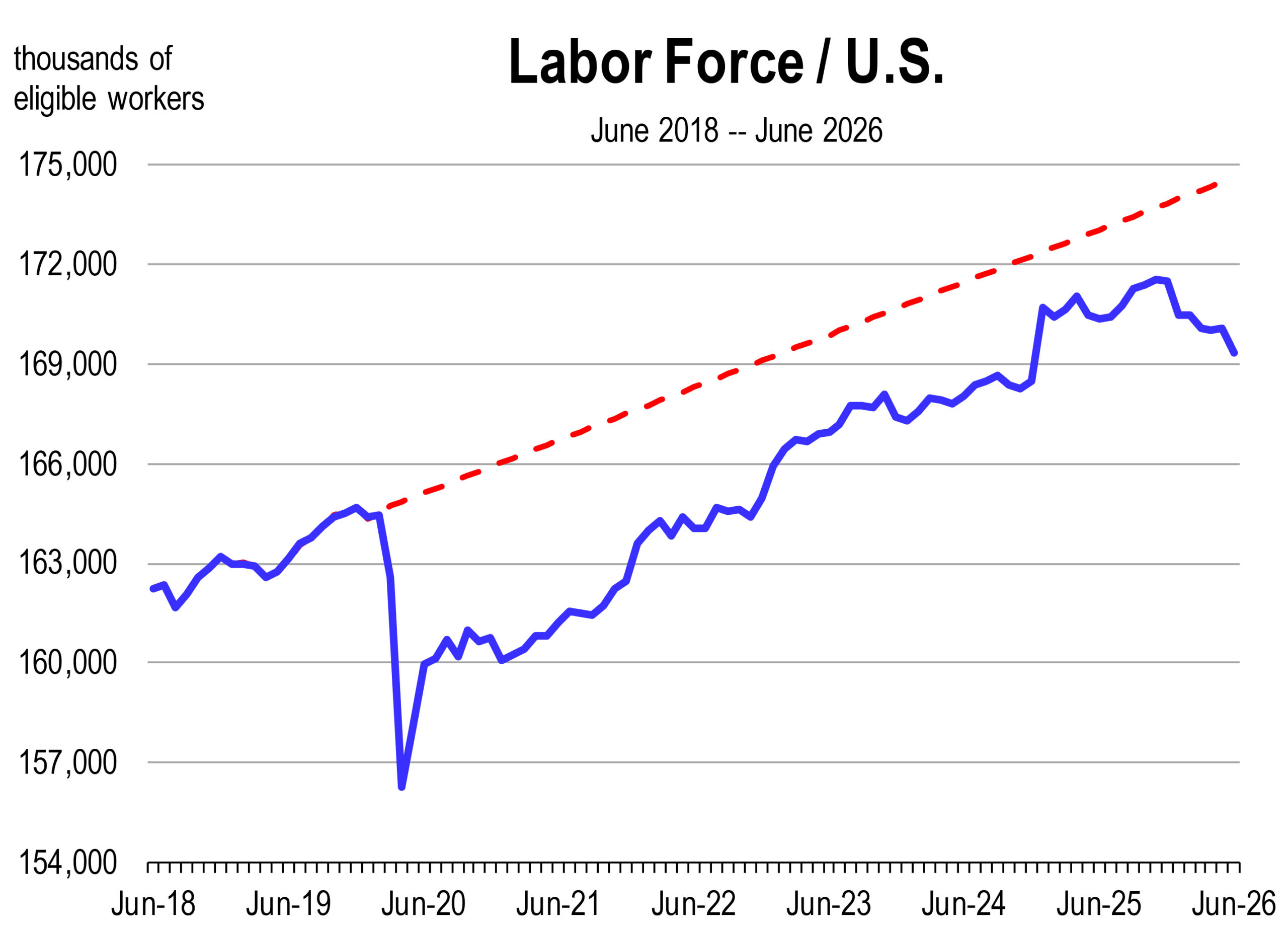
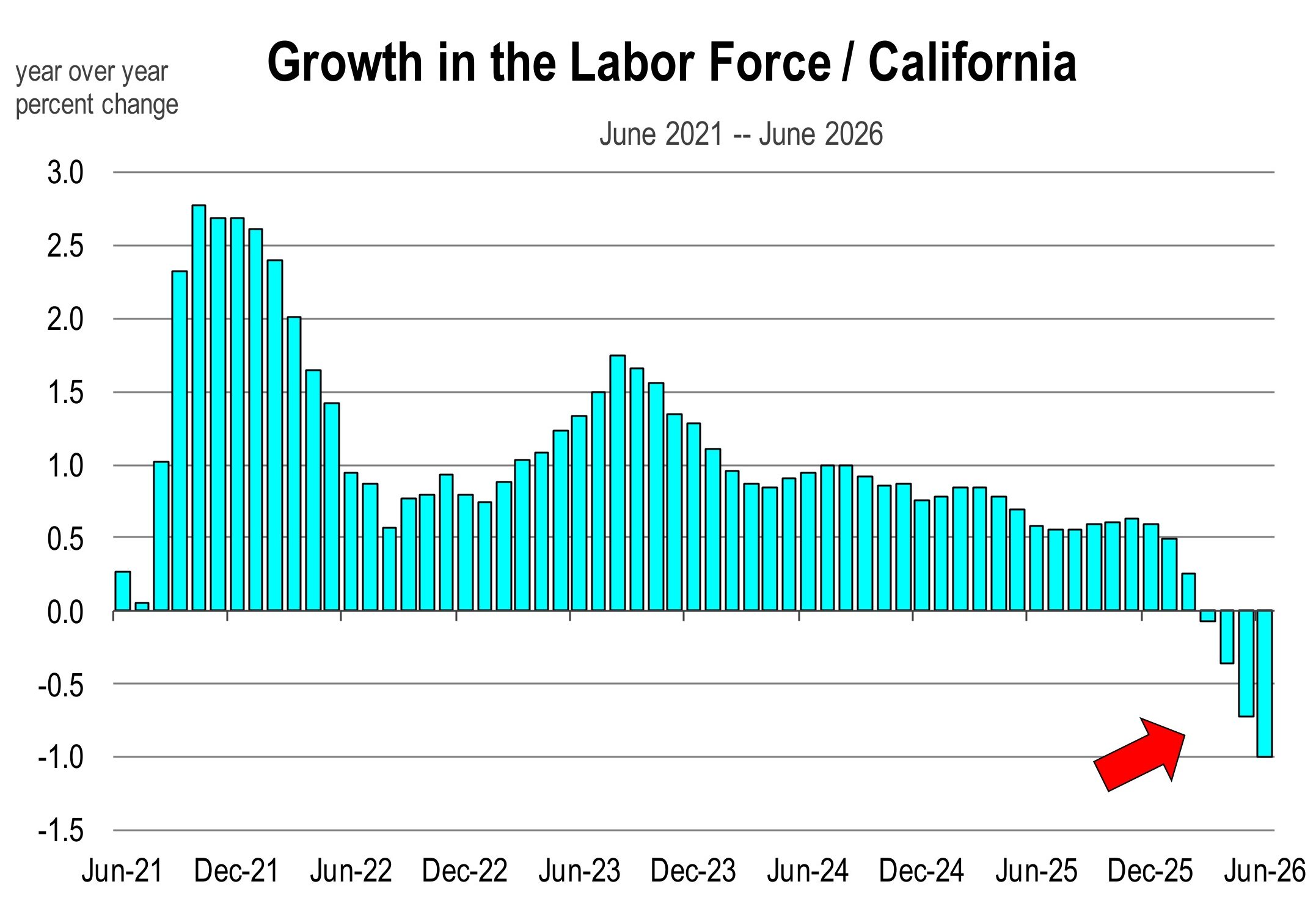
Meanwhile, the state’s unemployment rate is moving lower, not higher despite the austere hiring environment that has persisted since early 2023. And this is entirely due to the contraction of the labor force now occurring nationwide and accelerating downward in California.
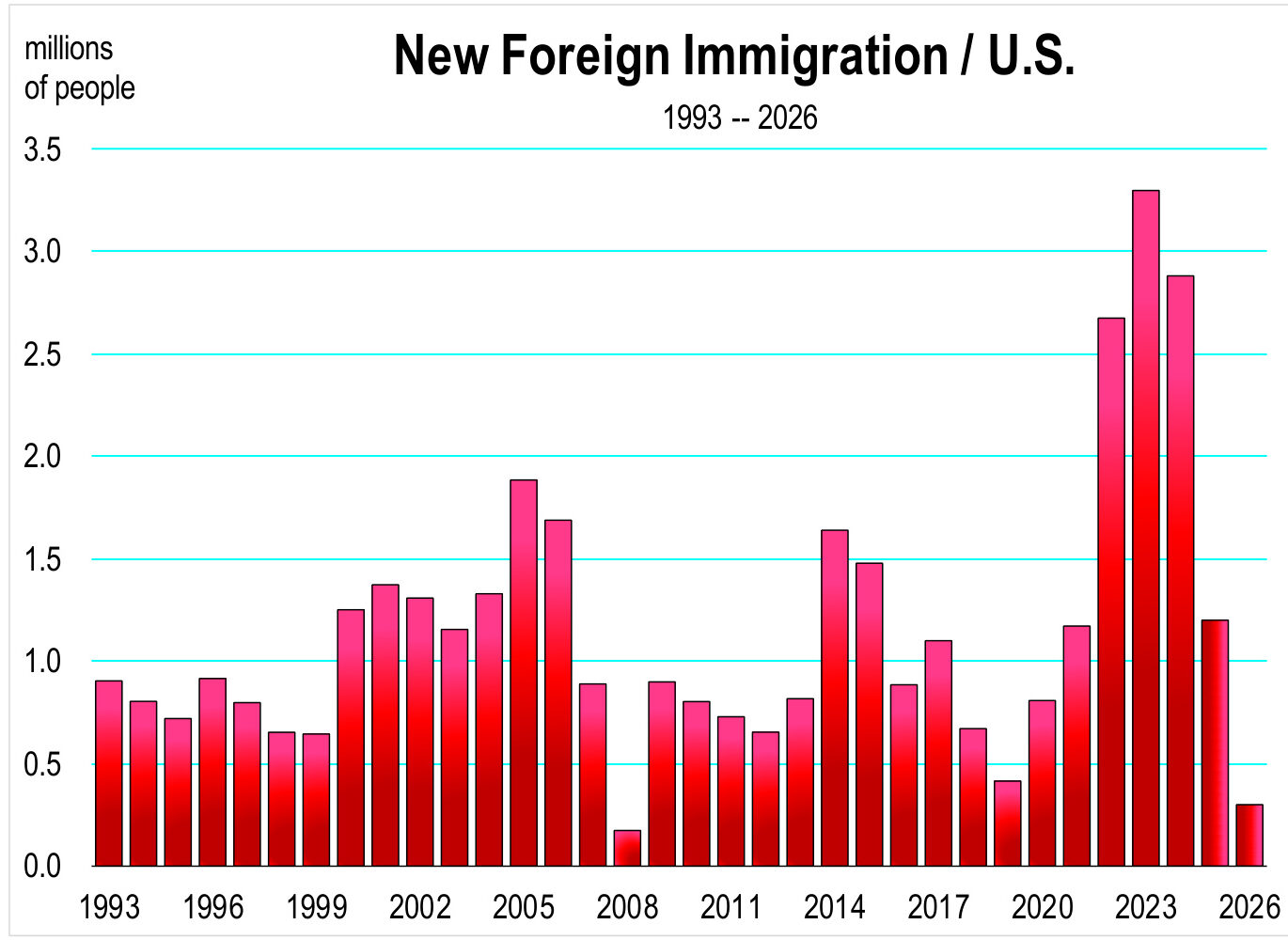
A declining labor force especially in California can be linked to deportations and retirements, notably of the baby boom generation that is now between the ages of 62 and 80. A reversal of the downward movement of the labor force is expected, but job growth will nevertheless remain modest.
Current Engines of Growth
in the U.S. Economy
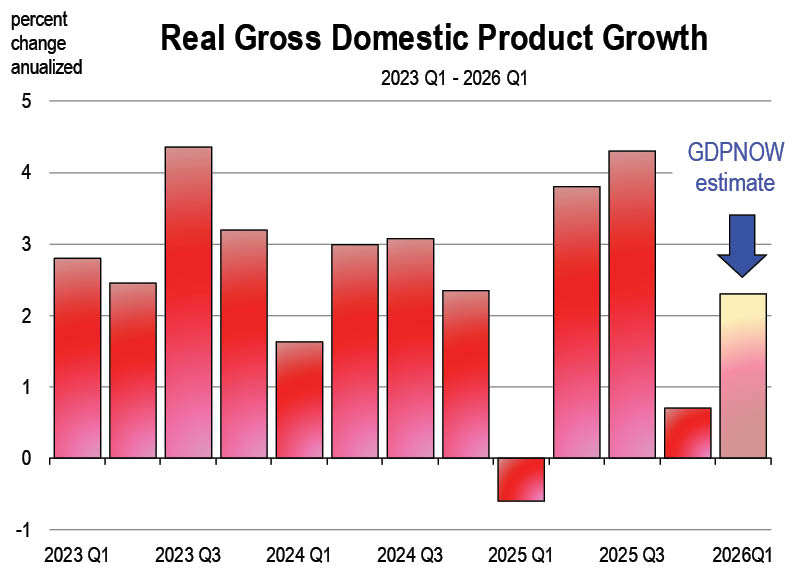
Modest growth in Q1 and Q2 of this year, due to the uncertainties of the war, the higher borrowing rates, and costs of gasoline, diesel and jet fuels seem now to be fading.
Furthermore, all major spending categories of GDP are contributing meaningfully to U.S. economic growth, and it is finally become more apparent in the output data. GDPNOW for Q3 is estimated at 4.7 percent in the latest reporting by the Atlanta Federal Reserve.
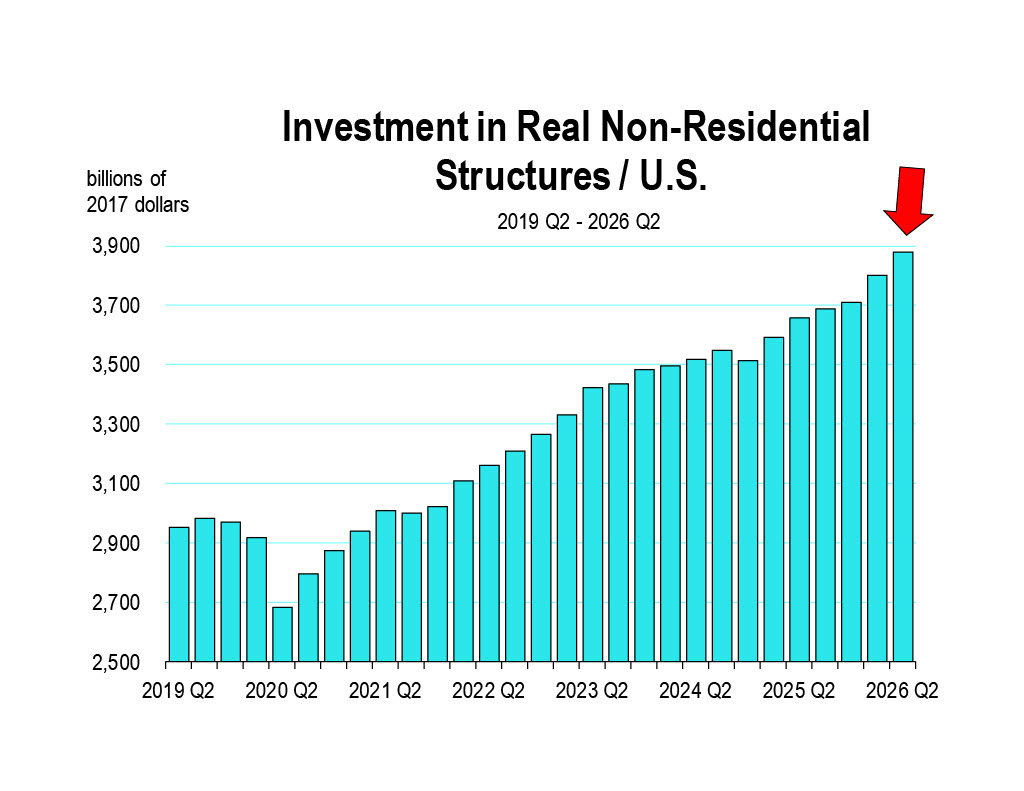
Consumption, and Investment in non-residential structures, software, and equipment is soaring. The onshoring of manufacturing together with data centers is leading the surge in business investment. Extraordinary cap-X spending has been quite apparent during the first half of 2026.
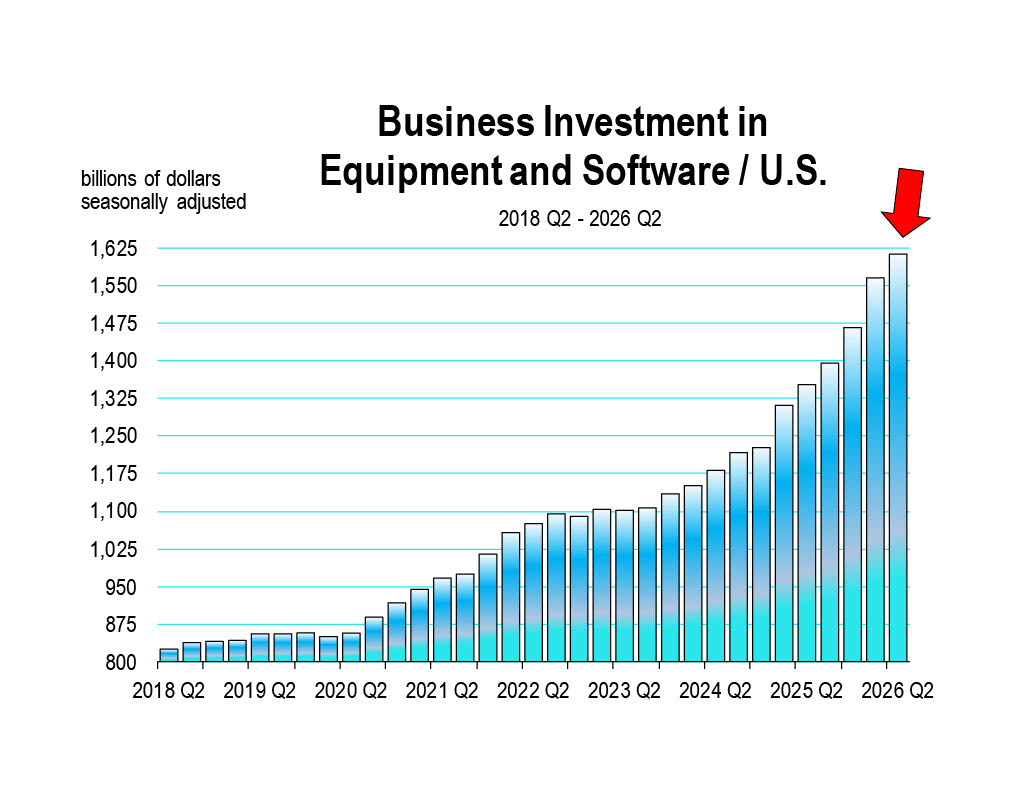
This is also true of business spending on equipment and software which has been rising sharply since the beginning of 2025.
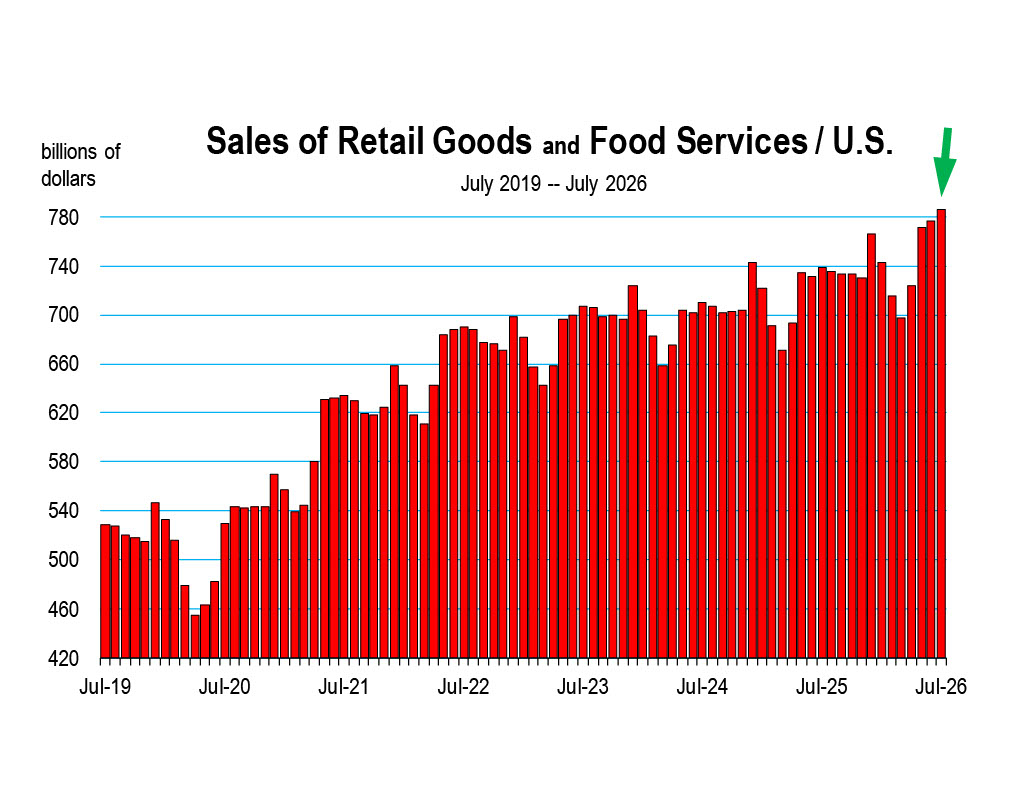
Household consumption, measured by either the growth of retail goods spending or personal consumption expenditures on goods and services has curiously accelerated this year.
While consumers are still frustrated by the price level, they are nevertheless spending freely. Despite modest growth of jobs this year for the second year in a row, the labor market is at or close to full employment. Furthermore household 401K portfolios rose sharply in 2025 and the average return for 2026 year-to-date is 14 percent.
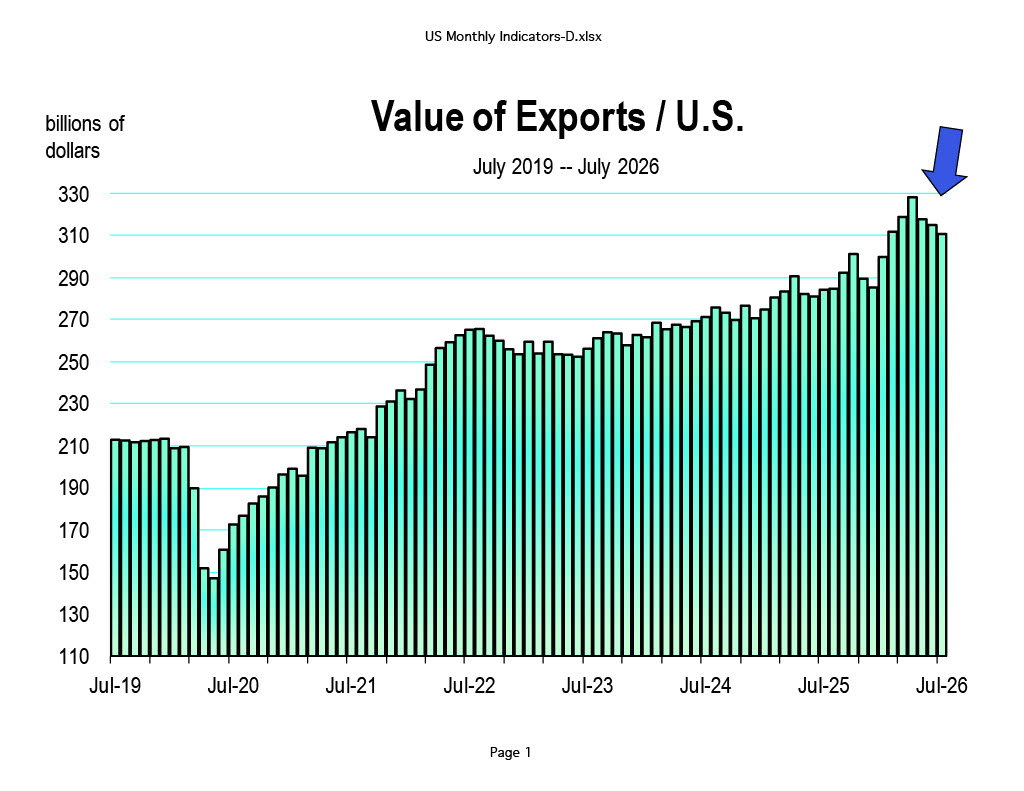
Domestic production is accommodating both the growth of domestic consumption from households and businesses, and foreign demand for goods and services. Export values have surged this year, adding further to total output growth.
Recession is entirely off the table this year. While overall economic growth in Q1 and Q2 was modest, Q3 growth appears more like a breakout. GDPNOW growth estimates currently peg the Q3 rate at 4.7 percent.
Inflation for the rest of the year will remain elevated. Ditto longer term interest rates.
Progress on both has been stalled, and noticeable improvement will be pushed into 2027 Q2.
The concern over cap-x was manifested in the stock prices of Amazon and Microsoft. Stock valuations for each were at year-to-date lows before their Q2 earnings reports. When Q2 earnings came out last month, share prices of both companies gapped higher, to all time record highs. NVDA is also near record highs following blockbuster earnings for Q2, reported on August 26.
With fears now dashed regarding AI cap-x spending, tech stocks could move higher ahead of Q3 reports. However, investors are nervous regarding inflation, interest rates, and what the Fed might do in the wake of stronger economic reports (such as the jobs report). The market historically is challenged in September and October. A rate hike by the Fed may well signal a death blow to the market, since it is unlikely to be priced in to date.
High crude oil prices, high yields on the 10-year Treasury are worrisome, but they are unlikely to materially slow down the economy in Q3 by themselves. Other catalysts which pose risks such as a serious stock market correction, new uncertainties regarding the war, or an unexpected Fed move could represent a shock, but these are low risk.
We are watching closely the jobs reports, the inflation reports, the efforts to resolve the war and normalize the price of crude oil, the “disruptability” of AI on the labor markets, and the probable Fed policies when they meet this month and again in late October for clues about the prospects for a higher growth year in 2027.
The California Economic Forecast is an economic consulting firm that produces commentary and analysis on the U.S. and California economies. The firm specializes in economic forecasts and economic impact studies, and is available to make timely, compelling, informative and entertaining economic presentations to large or small groups.

 July 2026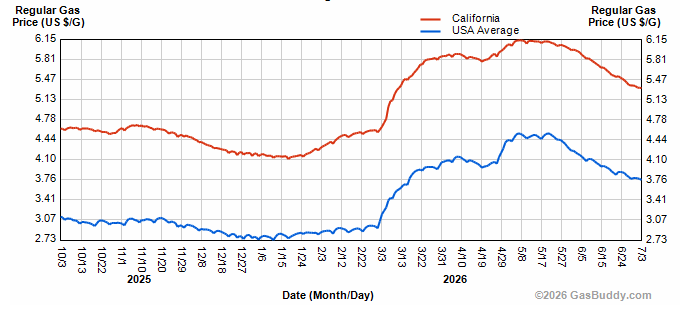
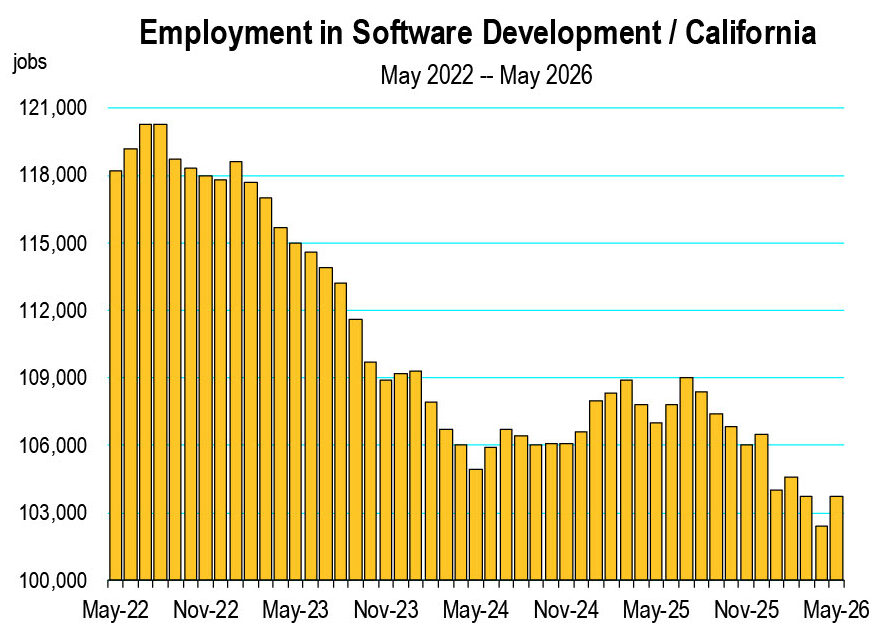
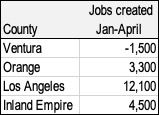 services, information, financial activities, and manufacturing. All of these industries continue to downsize.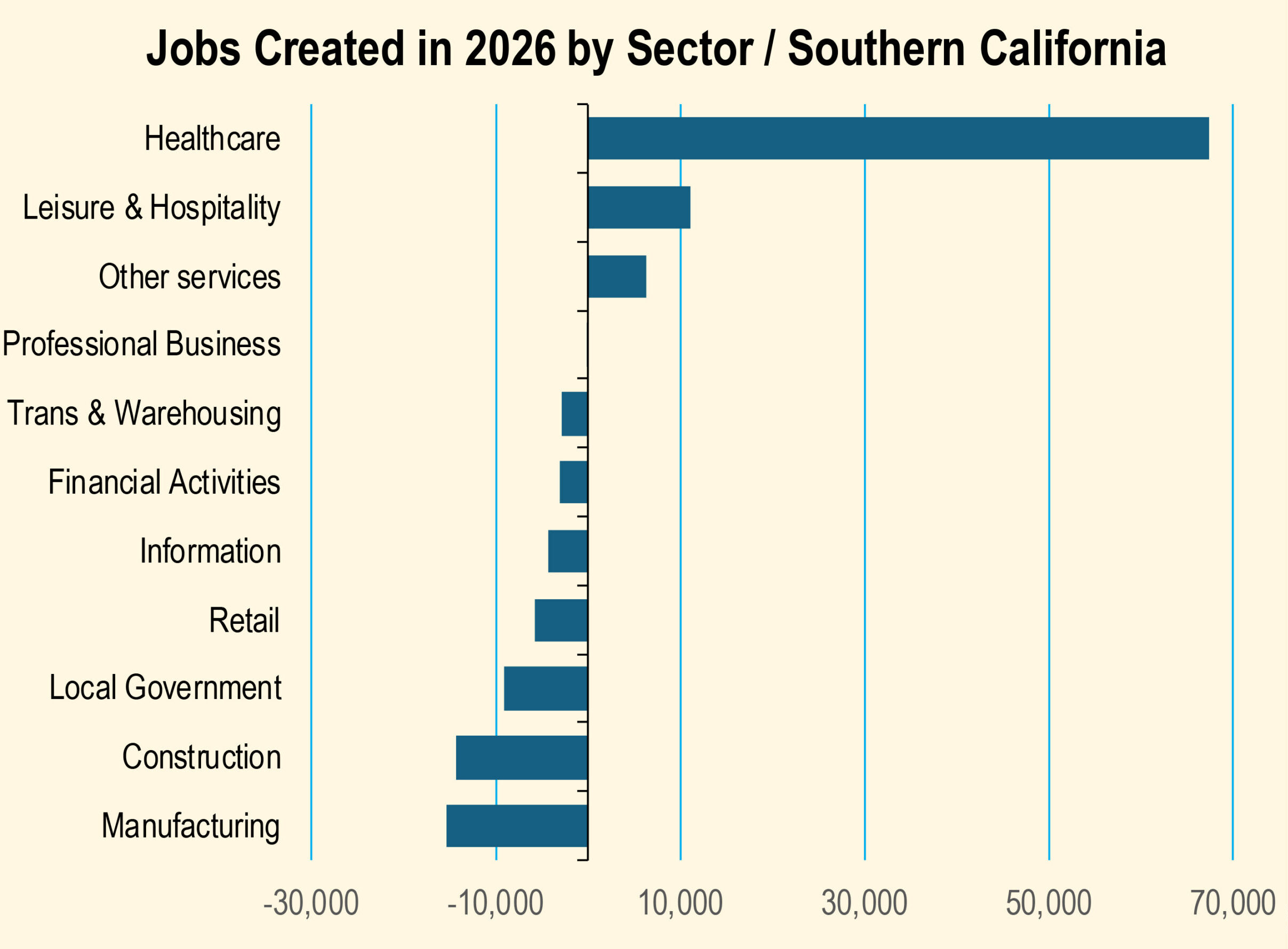
 laborforce (wanting to work) this year than last. This is why there is no demonstrable trauma apparent in the labor market so far.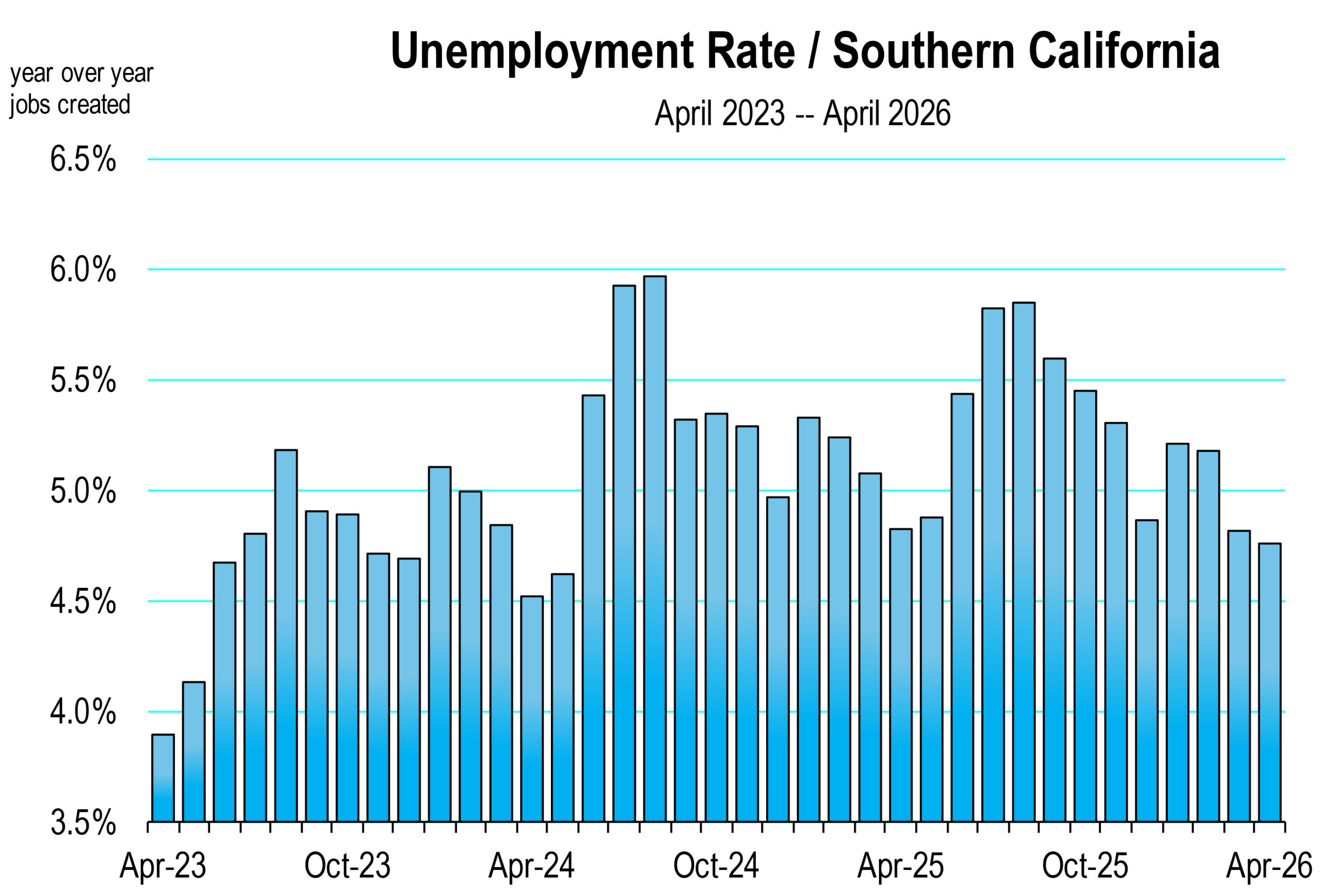
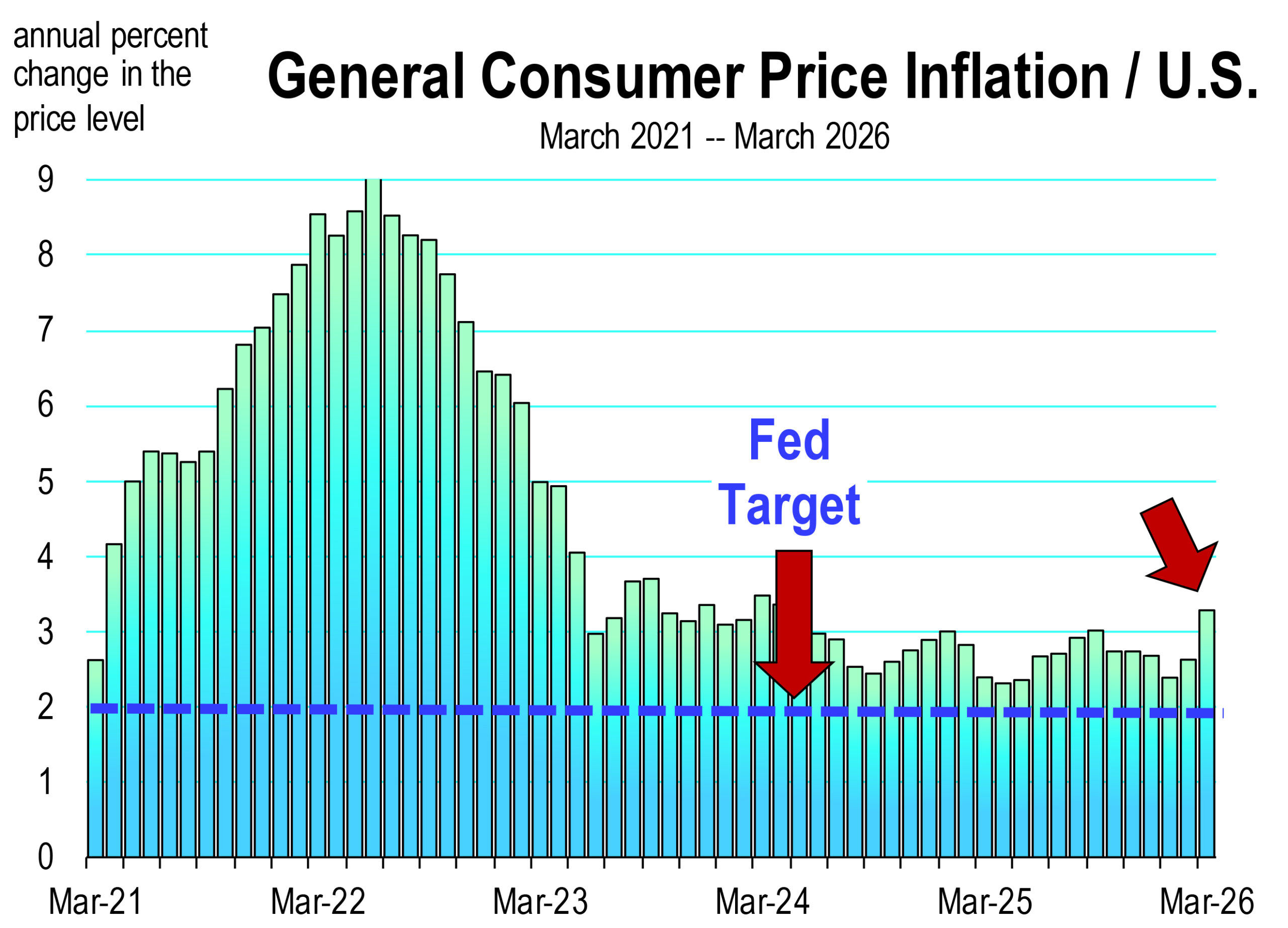 inflation and unemployment rates will increase this year.
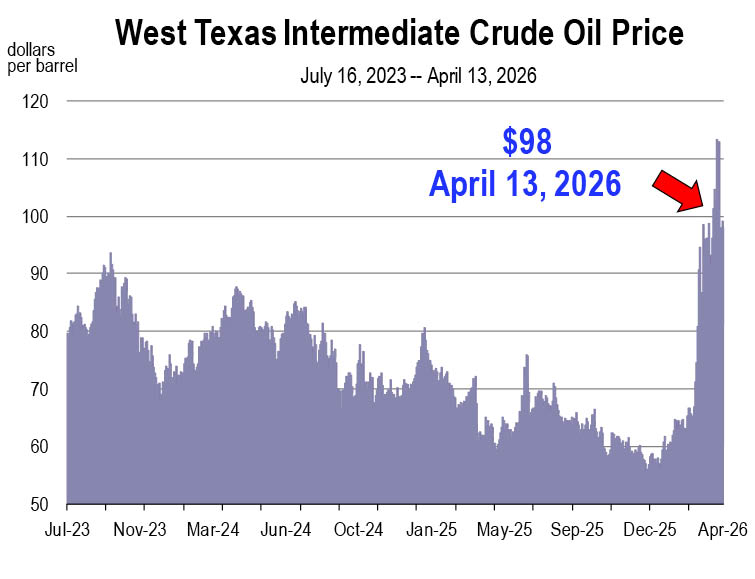 price level could be detected as tariff-driven.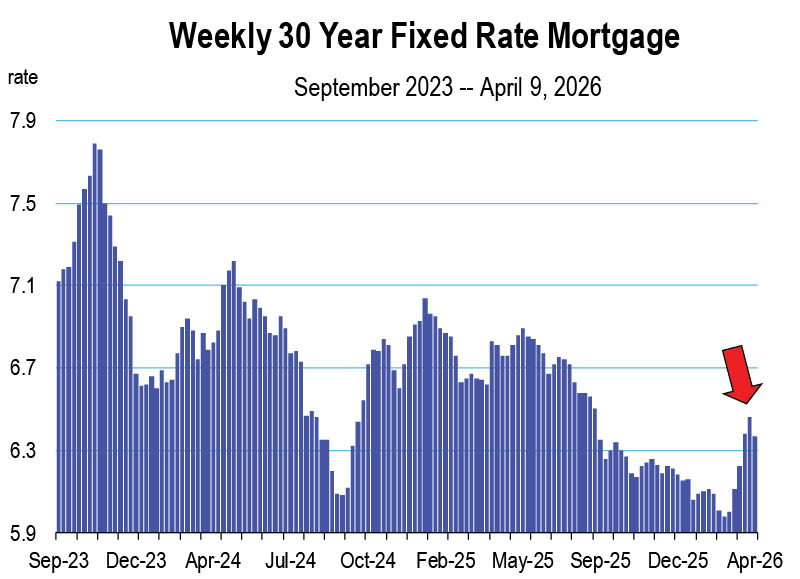
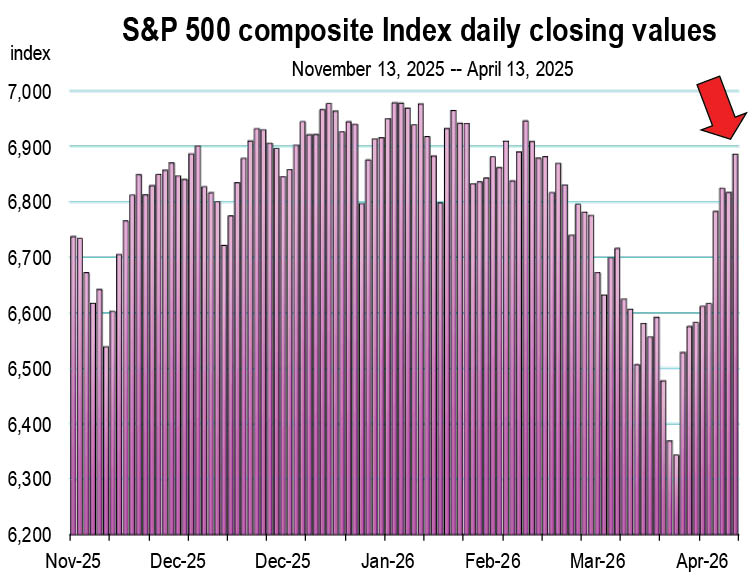 that their capability has been “de-fanged,” to resolve the matter as fast as possible so that prolonged inflation can be avoided this year.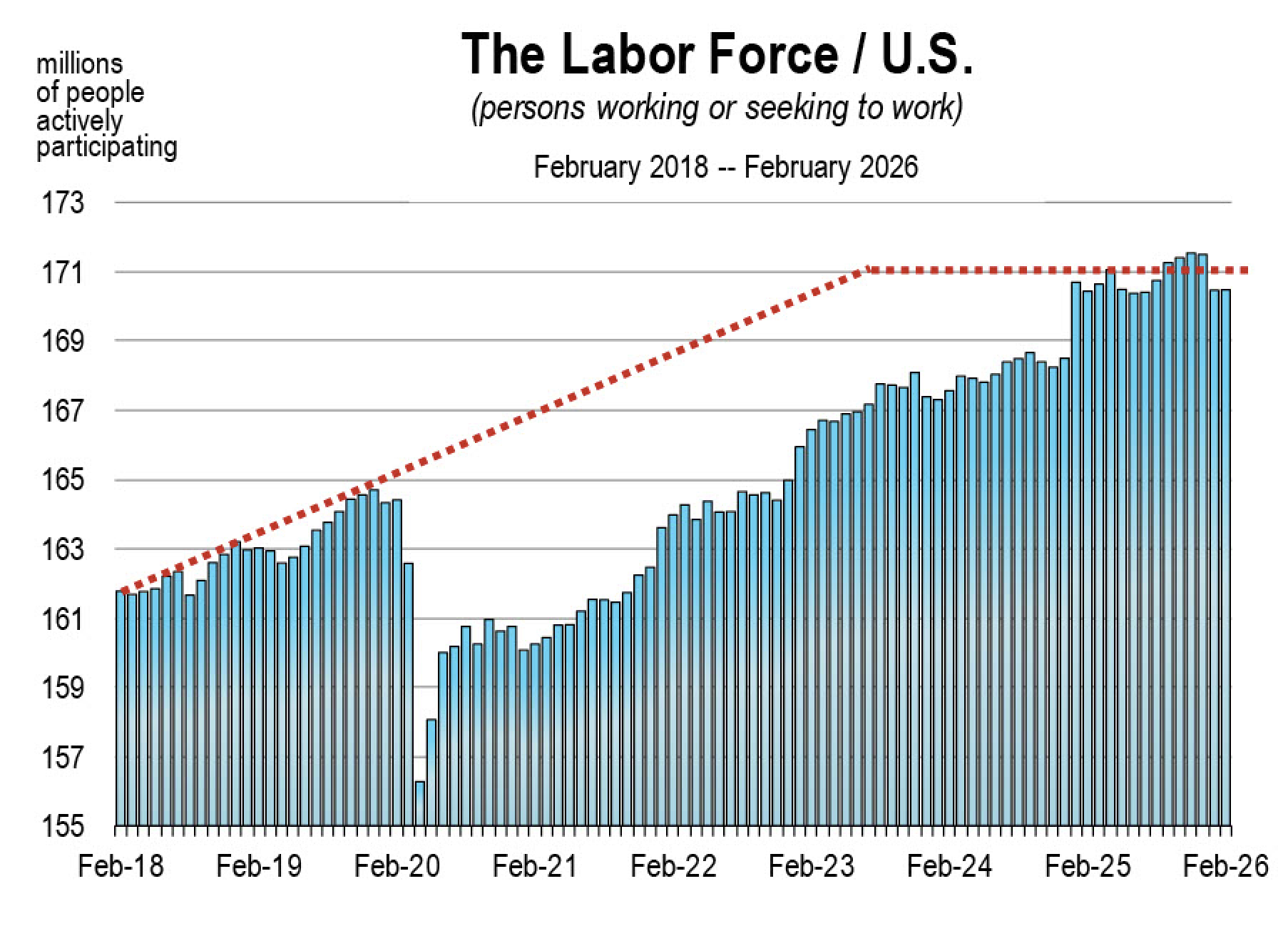
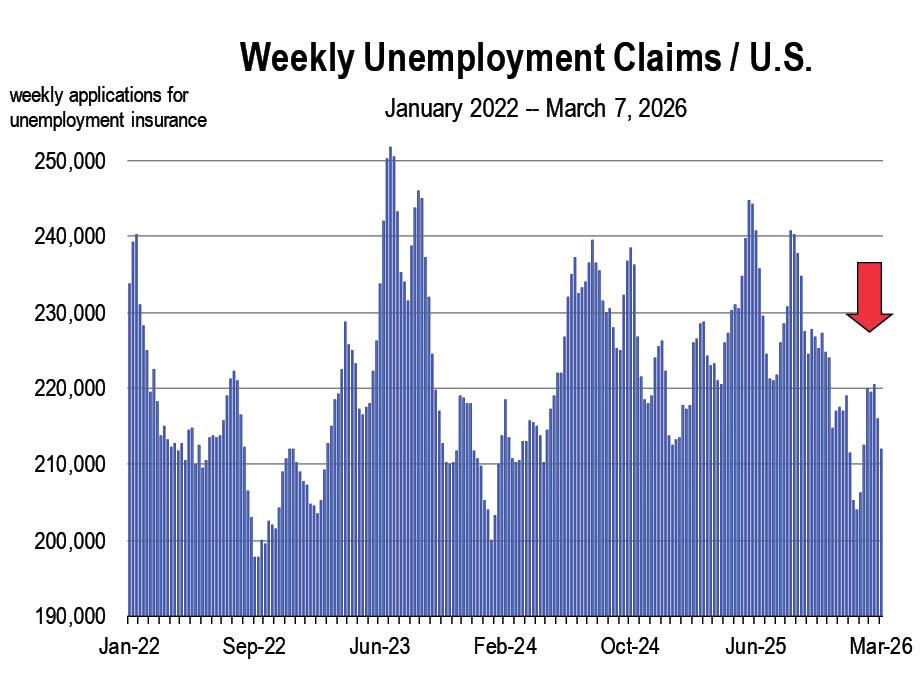 the unemployment rate has only ticked up 0.2 of a percentage point over this time period (to 4.4 percent), a negligible amount. Consequently, despite the lack of job creation, there is not much reported labor force misery. At least not yet.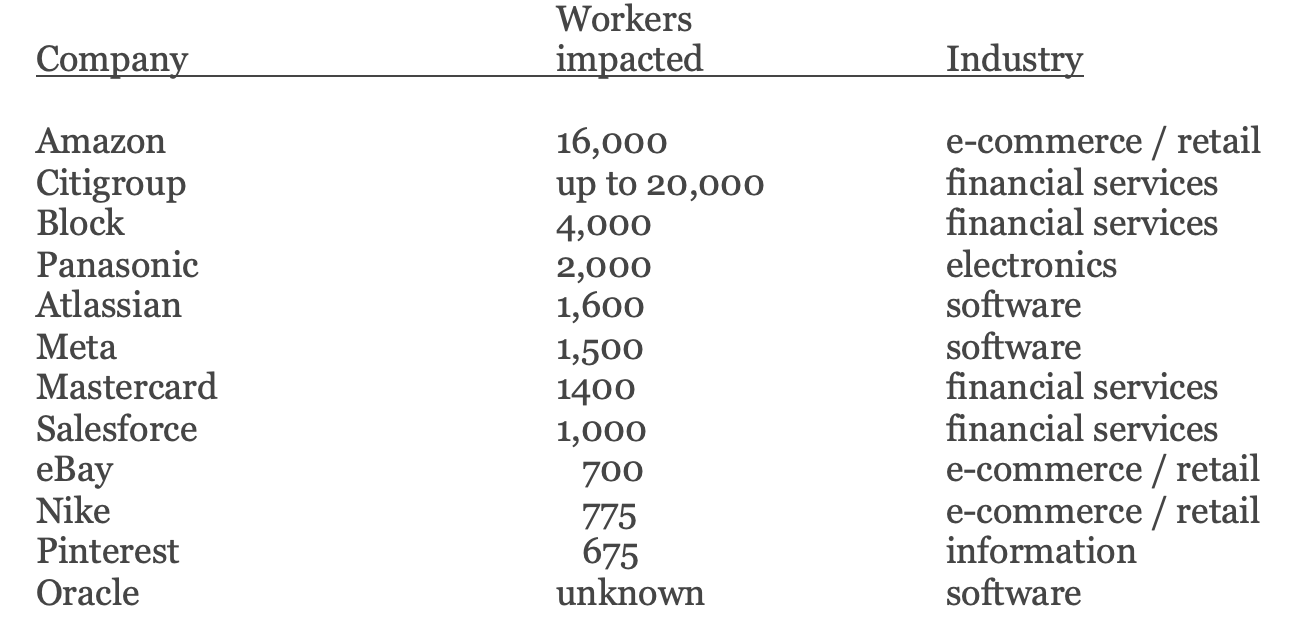
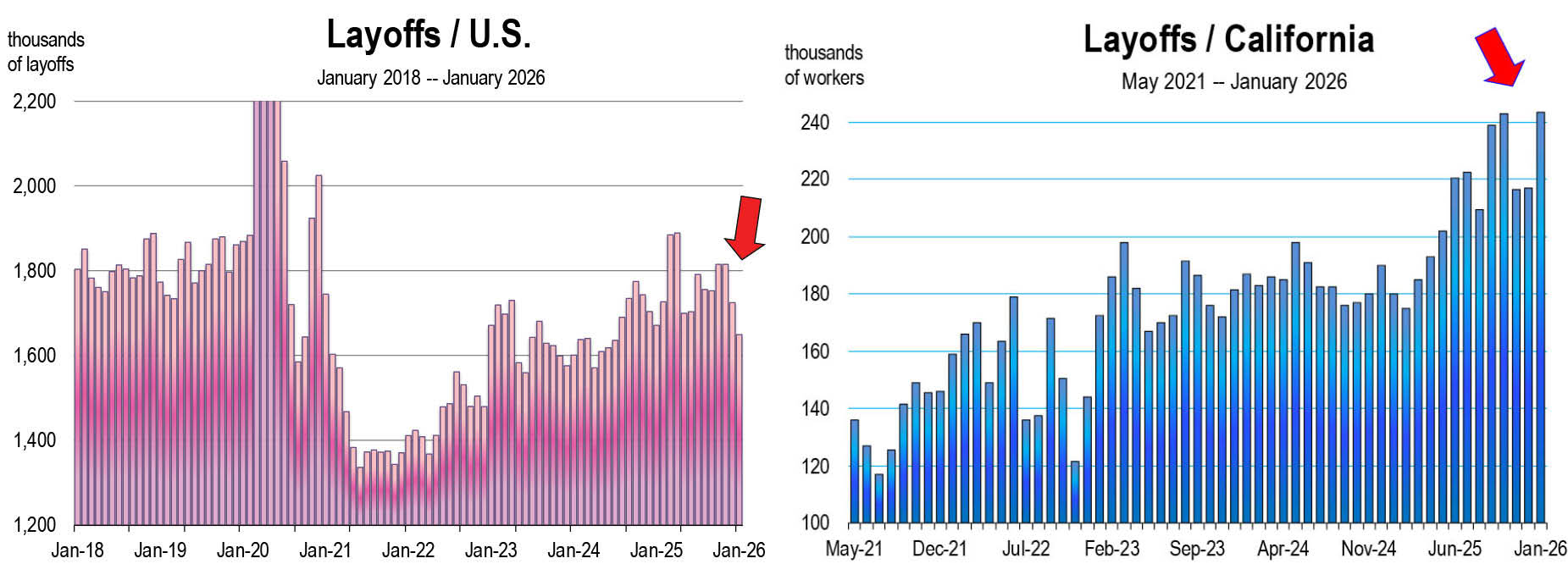


 Deportations are subtracting from the labor force and limiting its growth. Housing remains a chronic constraint for


 occur in other states. Nevertheless, California will realize some direct and spinoff effects of an expansion in domestic manufacturing activity especially in the advanced technology and defense products. This should result in new job creation by 2028.