Mark Schniepp
Mid June, 2026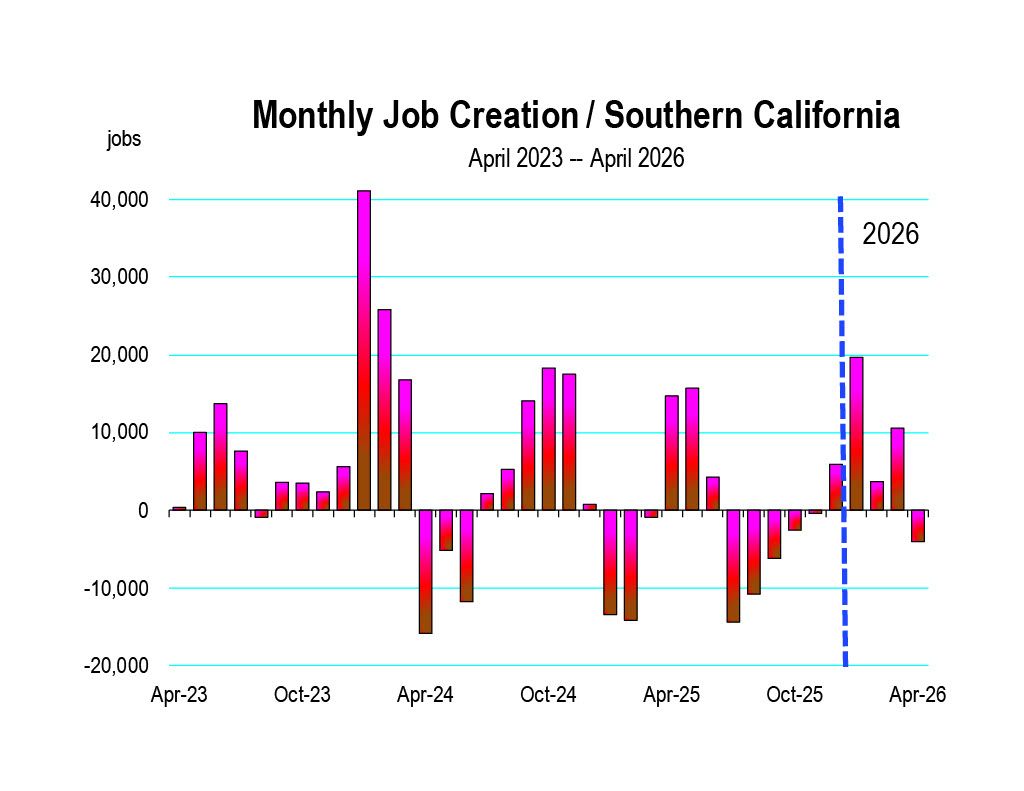
Relative to the rest of the U.S. economy, and historically, California’s labor market remains weak. We continue to monitor this closely because of all economic issues, this is the most fragile condition afflicting the state. Moreover, the state of the labor market is even more concerning for Southern California.
The good news is that job opportunities in the region remain positive. The bad news is that opportunities are limited to healthcare and leisure/hospitality. This was the story throughout 2025 and that condition has extended into 2026.
At the current pace of new job formation for the first four months of the year, only 28,000 jobs will be created in 2026. (For the entire state, the annual job creation pace is 173,000) Last year at this time, the region had lost 3,500 jobs, only to emerge with a net gain of 13,000 new jobs for the entire year. Though the pace this year has accelerated, it still extends the alarming slowdown of employment growth in place over the last 3 years.
The labor markets that would likely be impacted by meaningful adoption of AI include professional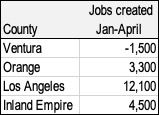 services, information, financial activities, and manufacturing. All of these industries continue to downsize.
There is no evidence yet that job creation in California is rebounding. Moreover, California has had some of the largest layoff totals in the country, particularly in tech and related industries (30,000 announced between January and May).
According to the website: jobloss.ai, 130,000 announced layoffs in the nation this year are due to AI. The largest numbers of layoffs are coming from Oracle, headquartered in Austin but with a significant presence in Redwood City (San Mateo County) with an estimated 6,500 employees.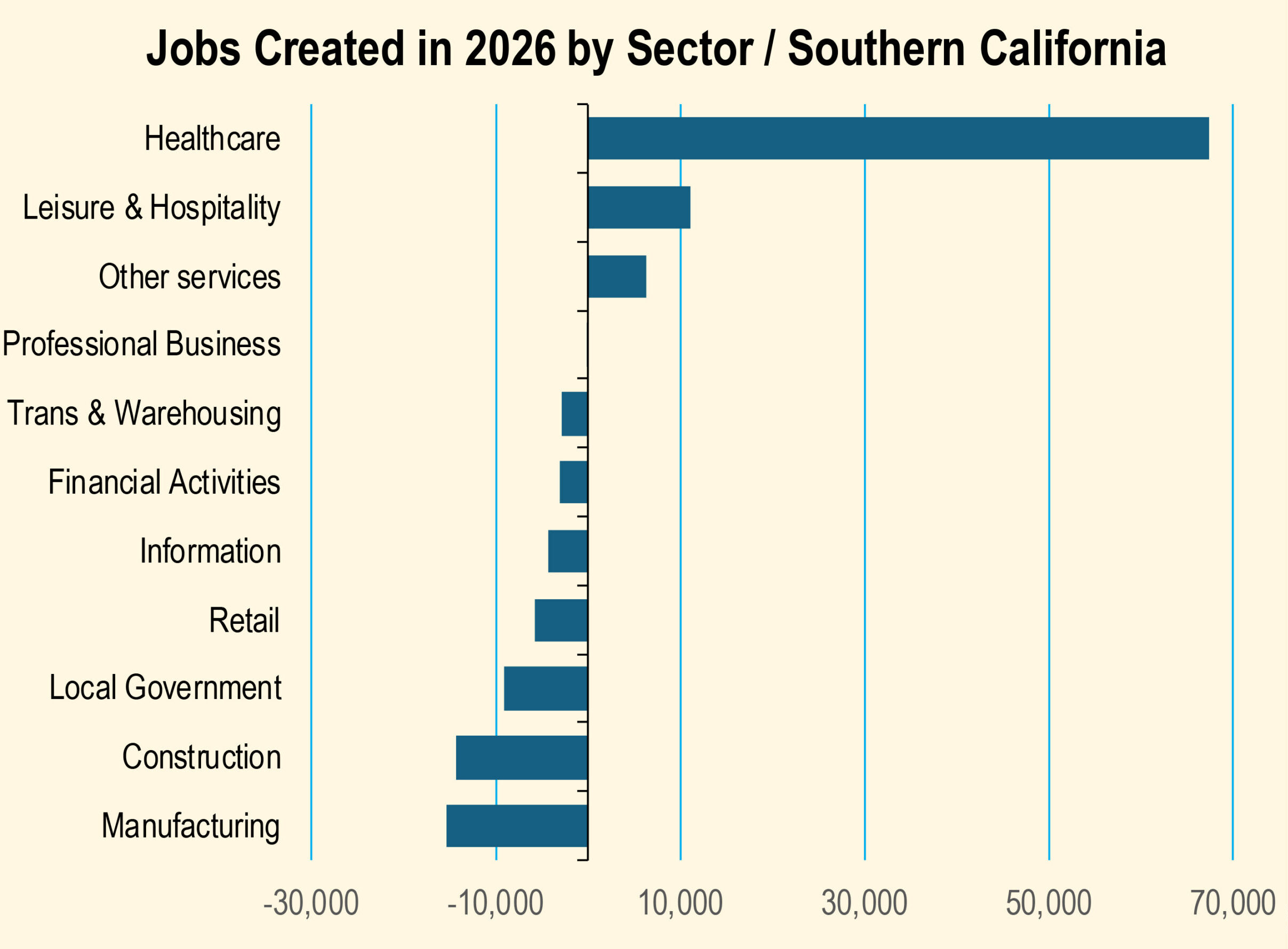
The normally weak record for job creation in 2025 and continuing this year would be cause for alarm, especially if the ranks of unemployed workers were stacking up.
But the unemployment rate has been relatively constant over the last 3 years. The latest rate, 4.8 percent, is lower than the statewide average and generally unaffected by the lack of job creation this year.
There are 69,000 fewer residents working this year than last, and 88,000 fewer people in the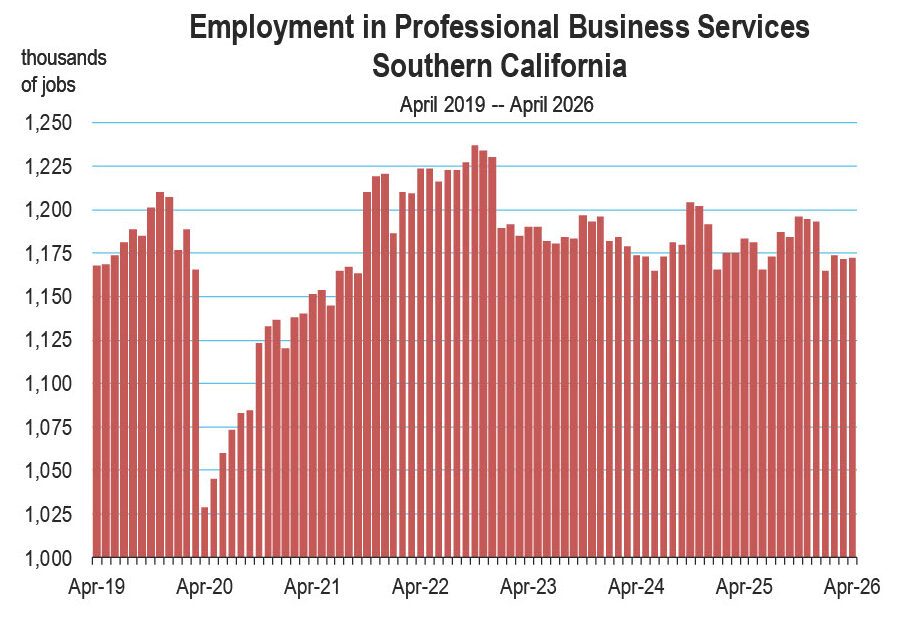 laborforce (wanting to work) this year than last. This is why there is no demonstrable trauma apparent in the labor market so far.
If economists don’t report that this labor market is weird, then they should be because it’s showing very little movement and rates of unemployment are still relatively low. Furthermore, applications for unemployment insurance show no tendency whatsoever of rising.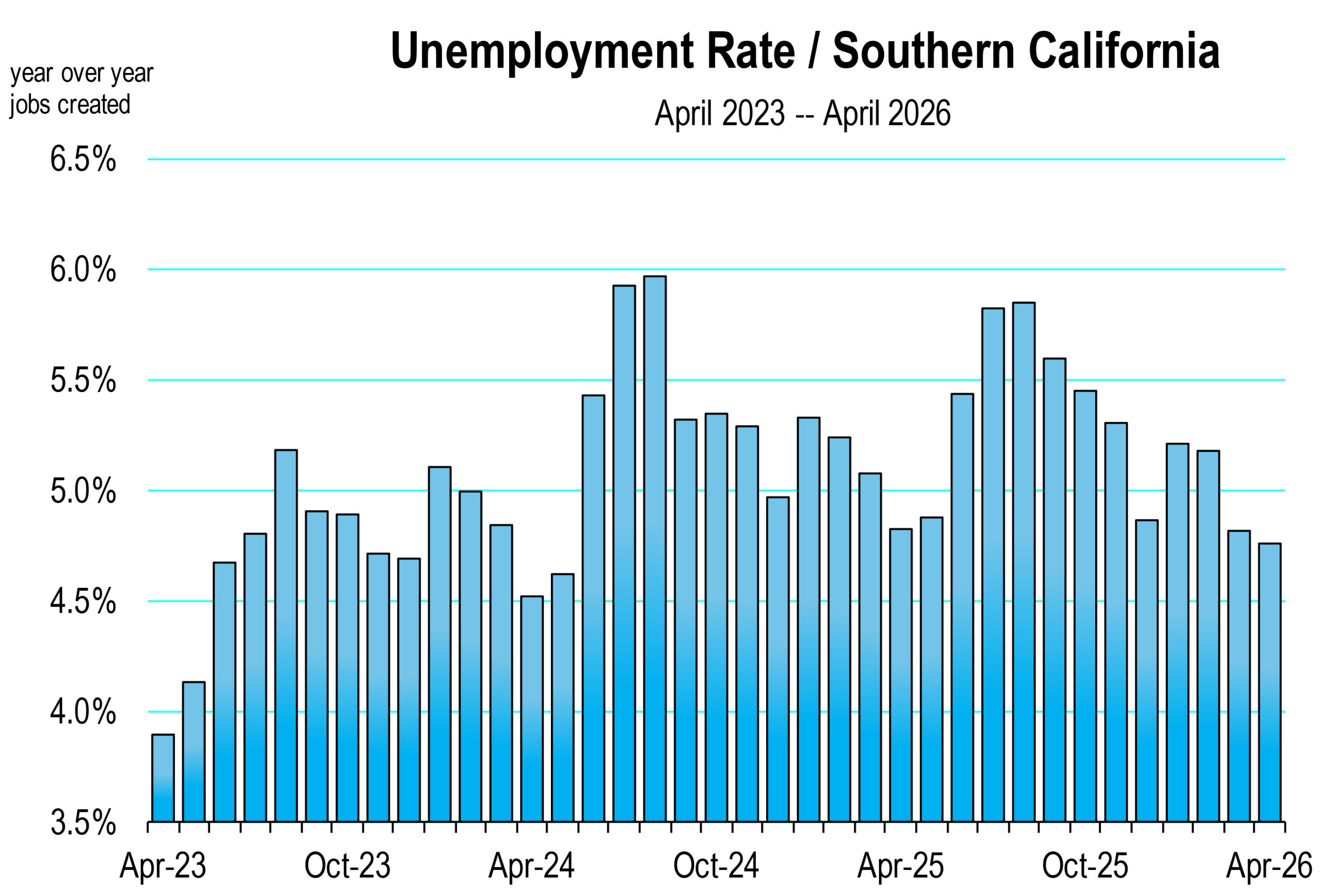
We can only assume that laid off workers are becoming re-employed rather quickly, preventing them from having to report themselves as unemployed.
Are labor markets going to change going forward ?
We don’t anticipate any major shifts this year. In fact, our forecast for job creation in 2026 is running close to the actual for the first four months of the year. Consequently, present labor market conditions are no surprise.
What is surprising is the decline in construction employment. Is a smaller workforce this year related to deportations, or are ongoing projects needing fewer workers through April? New development in the state remains strong, and new housing starts in California are 4 percent higher this year than in 2025.Also, infrastructure projects throughout the state are prolific.
Employment in construction is expected to increase providing the labor force expands to meet demand which is the quagmire limiting many sectors from hiring right now. The two factors impacting the labor market are the lack of labor force growth, and the broader adoption of artificial intelligence which is certainly restricting opportunities in tech, finance, manufacturing, and information.
The California Economic Forecast is an economic consulting firm that produces commentary and analysis on the U.S. and California economies. The firm specializes in economic forecasts and economic impact studies, and is available to make timely, compelling, informative and entertaining economic presentations to large or small groups.